


 /

 Print
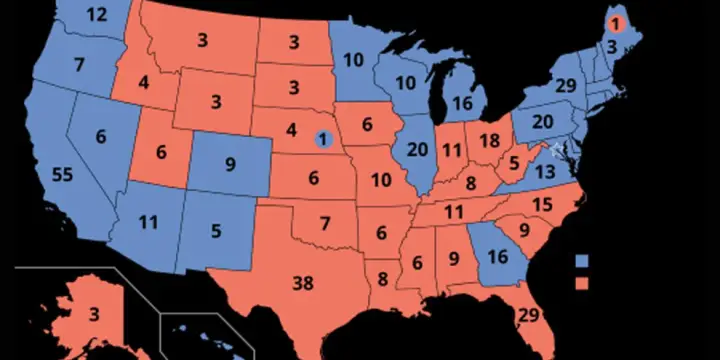
The battle for control of the U.S. Senate is drawing national attention as voters head to the polls in the 2026 midterm elections. Races in several states, including Alaska, Maine, Michigan, Ohio, Texas, Georgia and North Carolina, could play a significant role in determining which party controls the chamber.
Republicans and Democrats are competing in closely watched contests, with several seats considered competitive. The outcome of these races could reshape the balance of power in Washington and influence President Donald Trump’s ability to advance his legislative agenda.
The U.S. Congress consists of two chambers: the Senate and the House of Representatives. The Senate has 100 members, with two senators representing each of the 50 states. Senators serve six-year terms, and roughly one-third of the seats are contested every two years. All 435 House seats, meanwhile, are up for election every two years.
In the current Senate, Republicans hold 53 seats, while Democrats and their two allied independent senators collectively hold 47. Democrats need a net gain of four seats to secure a majority, while also defending their own competitive seats. This makes several state-level contests particularly important.
Alaska: One of the Most Closely Watched Races
Alaska has emerged as an important battleground in the fight for Senate control. Republican Senator Dan Sullivan is facing Democratic candidate Mary Peltola, a former member of the House of Representatives.
Alaska has traditionally been a Republican stronghold and has not supported a Democratic presidential candidate since 1964. However, Democrats have won statewide contests in the state.
Peltola made history in 2022 as the first Alaska Native elected to Congress. If elected to the Senate, she would become the first Alaska Native woman to serve in the chamber.
Fishing industry concerns, grocery prices and the rising cost of living are among the major issues shaping the race. Another unusual factor is the presence of a second candidate named Dan Sullivan on the ballot, raising concerns about possible voter confusion.
Maine: A Test of Trump’s Political Standing
In Maine, Republican Senator Susan Collins is seeking re-election against Democratic candidate Troy Jackson.
Jackson became the Democratic nominee in July after the party’s previous candidate, Graham Platner, withdrew following allegations of sexual assault, which he denied.
Maine is a state that voted for Kamala Harris in the 2024 presidential election, making Collins’ re-election campaign particularly significant for Republicans.
Rising living costs and dissatisfaction with Trump’s policies could influence the contest. However, Collins’ long political career, experience and established support among Maine voters remain important factors in the race.
Michigan: Could the State Elect Its First Muslim Senator?
Michigan’s Senate seat is open after Democratic Senator Gary Peters decided not to seek re-election.
Democrat Abdul El-Sayed, a physician and former Detroit health director, is competing against Republican Mike Rogers, a former member of the House of Representatives.
If elected, El-Sayed would become the first Muslim senator in U.S. history.
His positions on foreign policy and Israel have become subjects of political debate, with various groups funding advertisements addressing his views.
The race is attracting national attention because its outcome could affect the balance of power in the Senate.
Ohio: Democrats Seek to Regain a Senate Seat
In Ohio, former Democratic Senator Sherrod Brown is attempting to reclaim the seat he lost in 2024. He is facing Republican Senator Jon Husted.
Economic concerns, including energy and grocery prices, factory closures and employment opportunities, are among the major issues influencing voters in the state.
The contest is another closely watched race that could contribute to a change in the Senate’s political balance.
Texas and Georgia: Important Contests for Both Parties
Texas has become another significant battleground. Republican candidate Ken Paxton is facing Democrat James Talarico.
No Democratic presidential candidate has won Texas since 1976, and Republicans have maintained a strong statewide position for decades. However, recent polling has made the Senate contest more competitive. Corruption allegations and personal controversies surrounding Paxton have also featured in the campaign debate.
In Georgia, Democratic Senator Jon Ossoff is defending his seat against Republican Mike Collins.
Ossoff is seeking another term in a state that Trump carried in the 2024 presidential election. Georgia has become increasingly competitive between the two major parties in recent election cycles, making the Senate contest particularly important.
North Carolina and Iowa Also in Focus
In North Carolina, Democrat Roy Cooper is competing against Republican Michael Whatley, the former chairman of the Republican National Committee.
Although Republicans have maintained a strong position in the state for years, the contest is receiving considerable attention as Democrats seek additional Senate seats.
In Iowa, Republican Ashley Hinson is facing Democrat Josh Turek in the race to succeed retiring Republican Senator Joni Ernst. Republicans are seeking to retain the seat.
New Hampshire and Kansas Add to the Senate Battle
New Hampshire is another state attracting attention. Democrat Chris Pappas is facing Republican John Sununu for the open Senate seat left by retiring Senator Jeanne Shaheen.
Sununu is a former senator who lost his re-election bid to Shaheen in 2008.
In Kansas, Republican Senator Roger Marshall is facing Democratic candidate Adam Hamilton. The race is also being closely monitored as Democrats look for opportunities to gain seats in traditionally Republican territory.




Like our facebook page
Subscribe our YouTube channel