


 /

 Print
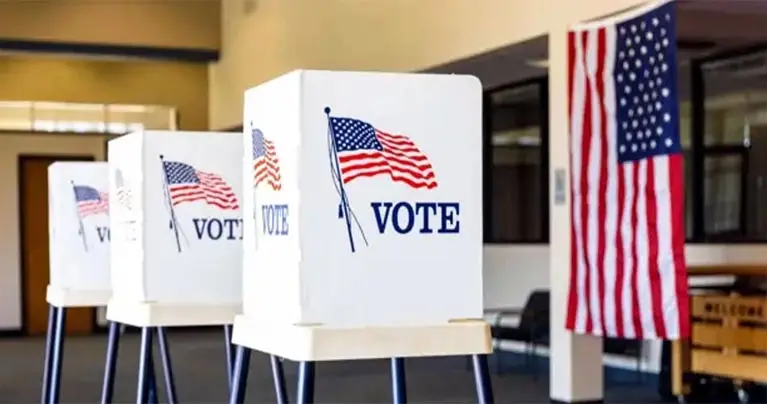
Two years after the presidential election, American voters are once again heading to the polls for a crucial electoral contest that could reshape the country’s political landscape. Although the midterm elections will not determine who occupies the White House, they will play a major role in deciding how much political power President Donald Trump will have during the final two years of his term.
The 2026 midterm elections are taking place Tuesday, November 3, with Republicans and Democrats competing for control of both chambers of Congress—the House of Representatives and the Senate.
The outcome will determine whether Trump’s administration can continue advancing its legislative agenda with support from a Republican-controlled Congress or face greater resistance from Democrats.
What Are Midterm Elections?
Midterm elections are held every two years in the United States, halfway through a president’s four-year term. They are called midterms because they take place between presidential elections.
Members of the House of Representatives serve two-year terms, meaning all 435 seats are contested every two years. Senators serve six-year terms, with approximately one-third of the Senate’s 100 seats up for election every two years.
Congress is responsible for passing legislation, approving government spending and overseeing federal government operations. A change in congressional control can therefore significantly affect a president’s ability to implement policies.
Which Positions Are at Stake?
All 435 seats in the House of Representatives are being contested in this year’s elections. Meanwhile, 35 of the Senate’s 100 seats are on the ballot.
Voters in several states are also electing governors and local representatives. Gubernatorial races in California, Florida, Georgia and Michigan are among the contests attracting particular attention.
Key Issues Shaping the Election
The economy is one of the central issues in the 2026 midterm elections. Rising concerns about energy costs, groceries, housing rents and healthcare expenses are influencing voters’ assessments of the country’s economic conditions.
Trump’s trade tariff policies have also become a major point of political debate. Democrats argue that tariffs have increased the prices of various goods and placed additional financial pressure on ordinary Americans.
Immigration enforcement is another significant issue dividing the two parties. Republicans argue that stronger border security and enforcement actions against undocumented immigrants fulfill the president’s campaign promises. However, several aspects of the administration’s immigration operations have generated controversy.
Artificial intelligence is also emerging as an important subject in the election debate. Lawmakers from both parties have expressed support for legislation to regulate the development and use of AI, while Trump’s approach to the issue has drawn political discussion.
Why Does Control of Congress Matter?
Republicans currently control both chambers of Congress, holding 218 seats in the House of Representatives and 53 in the Senate. However, their narrow majority in the House means that even a relatively small shift in seats could change the balance of power.
If Democrats gain control of either chamber, they could create significant obstacles to Trump’s legislative agenda and increase congressional scrutiny of his administration.
Control of the House would give Democrats greater authority over congressional committees, including the ability to organize hearings, summon government officials and request federal documents as part of their oversight responsibilities.
A change in Senate control could also complicate the administration’s efforts to secure approval for key government appointments and advance legislation.
Conversely, if Republicans retain control of both chambers, Trump would continue to benefit from support within Congress, making it easier to pursue his legislative priorities.
Potential Impact on the 2028 Presidential Election
Although the president’s name does not appear on the midterm ballot, the results are widely viewed as an important measure of public sentiment toward the administration and its policies.
The outcome could also influence political calculations ahead of the 2028 presidential election. Under the 22nd Amendment to the U.S. Constitution, Trump is constitutionally barred from being elected to a third presidential term.
Consequently, the midterm results could intensify discussions about potential Republican successors and the party’s future leadership.
For Democrats, the election could help shape their leadership choices, campaign strategies and potential presidential contenders for 2028. A strong performance could strengthen the position of party leaders, while disappointing results could prompt renewed debate over leadership and strategy.
Ultimately, the 2026 midterm elections are about more than the distribution of congressional seats. They will help determine the political balance of power in Washington, the scope of Trump’s legislative authority during his remaining two years in office and the direction of both parties as they prepare for the next presidential election.
Source: BBC




Like our facebook page
Subscribe our YouTube channel