


 /
/ 
 Print
Print
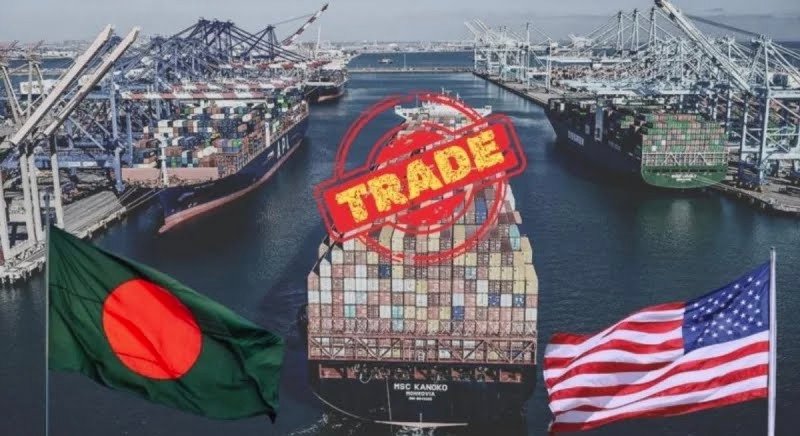
The United States on Friday implemented a new tariff regime covering imports from 60 countries, including Bangladesh, imposing additional duties ranging from 10 percent to 12.5 percent over concerns about the enforcement of restrictions on goods produced with forced labor.
The new measures took effect as the Trump administration’s temporary 10 percent global tariff expired, marking another step in President Donald Trump’s broader effort to reshape U.S. trade policy.
According to a notice published in the Federal Register on Thursday, the tariffs have been imposed under Section 301 of the Trade Act of 1974. The U.S. administration said the new framework would apply to approximately 99.4 percent of total imports, although several categories, including oil and gas, fertilizers and certain food products, remain exempt.
The White House said the move is intended to strengthen enforcement against forced labor in global supply chains and encourage U.S. trading partners to adopt similar standards.
The administration also argues that Section 301 provides a more durable legal basis for maintaining minimum import tariffs following previous court challenges to broader trade measures.
Goods already in transit before the policy took effect will remain exempt until 12:01 a.m. Eastern Time on July 28.
In a statement, U.S. Trade Representative Jamieson Greer said the United States has prohibited imports produced with forced labor for nearly a century and has consistently enforced those restrictions. He said Washington expects its trading partners to uphold similar standards, describing the new tariffs as part of a broader effort to address human rights concerns and unfair trade practices.
Under the final schedule, imports from Argentina, Bangladesh, the United Kingdom, Cambodia, Canada, Ecuador, El Salvador, Guatemala, Honduras, India, Indonesia, Jordan, Malaysia, Mexico, Pakistan, Sri Lanka and Trinidad and Tobago will face a 10 percent tariff.
For imports from the European Union, Taiwan, Japan, South Korea and Switzerland, the new duty will be added to existing Most Favoured Nation (MFN) tariff rates, resulting in effective tariff rates of either 10 percent or 12.5 percent.
The remaining 38 countries, including China, will be subject to a 12.5 percent tariff. The United States has long accused China of using forced labor involving Uyghur minorities in Xinjiang, an allegation Beijing has repeatedly denied.
Trump administration officials have also indicated that tariffs on Chinese imports may be adjusted in line with the tariff ceiling agreed during the trade truce reached with Chinese President Xi Jinping, while maintaining the previously agreed upper limit.
Before the latest measures took effect, the effective tariff rate on most Chinese goods had been reduced to 10 percent, excluding the separate 25 percent tariffs that remained in place on certain industrial products.


Like our facebook page
Subscribe our YouTube channel