


 /
/ 
 Print
Print
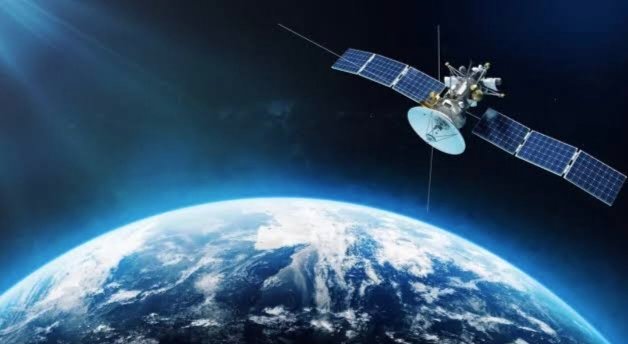
A military conflict in space could erupt within the next five years, experts have warned, as several countries develop weapons capable of targeting satellites. The United Kingdom and its allies are also preparing for a potential conflict, according to a report by British newspaper The Telegraph.
The report said some companies originally established to develop commercial space technologies are increasingly becoming involved in military projects. Astroscale, a UK-based company founded to tackle the problem of space debris, is reportedly working on classified military programmes. Meanwhile, Orbit Fab, which develops technology to refuel satellites in orbit, is working with the UK Ministry of Defence to develop defensive and offensive space capabilities.
Dr Julia Balm, a researcher at King’s College London’s Freeman Air and Space Institute, said rival nations were increasingly targeting allied countries’ space assets.
Speaking at an event hosted by Astroscale in London, she said, “We are not just seeing the emergence of conflict in space; such a conflict could begin within the next five years.”
Satellite Attacks Could Disrupt Modern Life
A major attack on satellites could disrupt global positioning systems (GPS), internet connectivity, television broadcasting, weather forecasting and air traffic management. Critical services, including banking, could also be affected, potentially causing widespread disruption to modern life.
Concerns have grown over the space activities of Russia and China. US intelligence agencies reportedly believe that Russia’s Cosmos 2553 satellite, launched in 2022, may contain components associated with a nuclear device. However, this assessment has not been independently confirmed.
A nuclear explosion in space could damage thousands of satellites through radiation and high-energy particles. Such an event could also render parts of Earth’s orbit unusable for an extended period.
Some Russian satellites have also been observed manoeuvring suspiciously close to other spacecraft. Earlier this week, a Russian military satellite reportedly approached the ICIE-X36 satellite, which has been supporting Ukraine.
China, meanwhile, has tested spacecraft capable of capturing objects in orbit. Its satellites have also demonstrated the ability to refuel other spacecraft and manoeuvre at very close range.
Space Technology Companies Turn Towards Defence
Nick Shave, managing director of Astroscale, said the company had not initially intended to work in the defence sector. However, its approach changed after the UK’s 2024 Strategic Defence Review identified space as a potential domain of warfare.
“For the past 20 to 30 years, we have been able to put objects into orbit and feel confident that they would not be attacked. But the situation is changing,” Shave said.
He added that Astroscale was exploring ways to develop protective measures to prevent hostile spacecraft from approaching or interfering with satellites.
Jacob Geer, managing director of Orbit Fab, said technologies that allow satellites to manoeuvre could serve both defensive and offensive purposes.
“The world has changed, and that is why this shift towards defence has taken place,” he said. “Technologies for operating spacecraft in close proximity can provide both defensive and offensive capabilities in space.”
UK Steps Up Preparations for Space Conflict
The UK is strengthening its preparations for a potential conflict in space. In September, the Royal Air Force announced plans to establish a dedicated space squadron to help protect British satellites.
UK Defence Secretary John Healey’s successor, John Healey was not named in the supplied report; the report instead quoted Defence Secretary John Healey’s predecessor, John Healey?
Defence Secretary John Healey’s successor, John Healey was not named in the supplied report; it identified Defence Secretary John Healey’s predecessor, John Healey?
UK Defence Secretary John Healey’s predecessor was not identified in the supplied report. The report quoted Defence Secretary John Healey’s successor, John Healey?
UK Defence Secretary John Healey’s successor, John Healey was not named in the supplied report. It quoted Defence Secretary John Healey’s predecessor, John Healey?
UK Defence Secretary John Healey’s successor, John Healey was not named in the supplied report. The report quoted Defence Secretary John Healey’s predecessor, John Healey?




Like our facebook page
Subscribe our YouTube channel