


 /
/ 
 Print
Print
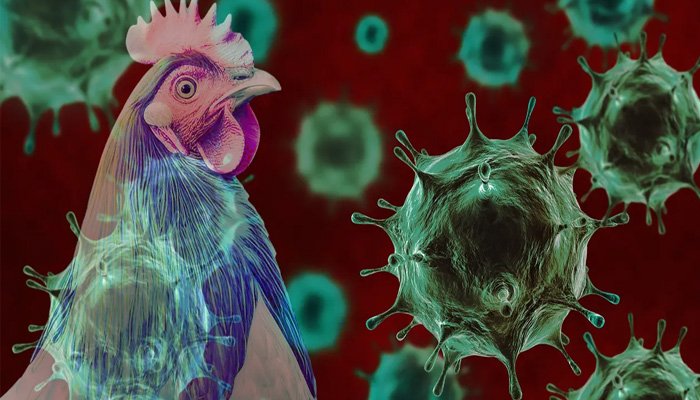
Scientists have long warned that bird flu, or the H5N1 virus, could one day spread from birds to humans and trigger a global health crisis. A new study by Indian researchers has outlined how such transmission could begin and at what point it could spiral out of control.
The findings were reported in a BBC article published on Thursday (18 December).
According to the report, the H5N1 strain of avian influenza has been present across South and Southeast Asia for many years. Data from the World Health Organization (WHO) show that between 2003 and August 2025, a total of 990 human infections were recorded across 25 countries. Of those infected, 475 people died, indicating a fatality rate of nearly 48 percent.
The virus has also had a major impact in the United States, where around 180 million birds have been affected. The outbreak has spread to more than 1,000 dairy farms across 18 states, and at least 70 human infections have been confirmed.
India has also seen serious consequences. In January this year, three tigers and one leopard died from H5N1 at a wildlife rescue centre in Nagpur.
Scientists say symptoms of human infection usually resemble severe flu, including high fever, cough, sore throat, body aches and, in some cases, eye infections. Some infected individuals may show no symptoms at all. Although the current risk to humans remains low, health authorities are closely monitoring the virus.
Driven by these concerns, researchers Philip Cherian and Gautam Menon from Ashoka University have developed a new computer-based model to study the potential spread of H5N1. Their research, published in the journal BMC Public Health, demonstrates how the virus could spread among humans and how early intervention could prevent a larger outbreak.
The study uses an open-source simulation platform called “IndiSim”, which was previously used to analyse COVID-19 transmission. Researchers explain that a pandemic could begin quietly, with the virus first passing from an infected bird to a farm worker or someone working in a live market. The greatest danger arises once human-to-human transmission begins.
According to the model, an outbreak can be contained if the number of infected people remains between two and ten. However, if infections exceed ten individuals, the risk of widespread community transmission rises sharply.
For the simulation, researchers modelled a village in Namakkal district of Tamil Nadu, one of India’s major poultry hubs with more than a thousand farms and millions of chickens. A virtual village was created with homes, workplaces and markets to track how the infection could spread.
The findings suggest that culling infected birds can be effective only if carried out before the virus infects humans. Once human infections occur, rapid isolation and household-based quarantine can help contain the spread. However, if third-level transmission begins, strict measures—including lockdowns—may become necessary.
Seema Lakdawala, a virologist at Emory University in the United States, noted that the model assumes rapid viral transmission, while in reality not all influenza viruses spread at the same rate. She added that some individuals could act as “super-spreaders,” similar to what was observed during the COVID-19 pandemic.
She further explained that if H5N1 establishes sustained human-to-human transmission, its impact could resemble the 2009 swine flu outbreak. However, the availability of antiviral drugs and potential vaccines means the world is better prepared than before.
Researchers conclude that such simulation models can be continuously updated with real-time data, helping policymakers identify the most critical decisions during the early stages of a potential outbreak





Like our facebook page
Subscribe our YouTube channel