


 /
/ 
 Print
Print
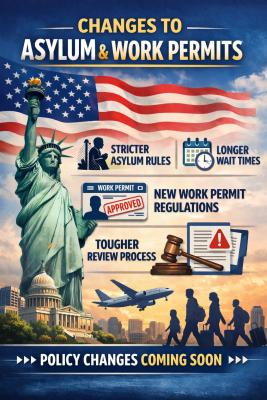
The United States is poised for significant policy changes regarding asylum applications and employment authorization, signaling a tougher approach that could substantially affect thousands of applicants.
Under a proposed rule introduced President Donald Trump, the process for obtaining work authorization for asylum seekers may become more restrictive and prolonged.
According to a proposal published by the U.S. Department of Homeland Security (DHS), asylum applicants would be barred from applying for a work permit until at least 365 days have passed since filing their asylum claim. Currently, the waiting period ranges between 150 and 180 days. If implemented, the new rule would require applicants to wait at least one full year before becoming eligible to seek employment authorization.
The proposal further states that if U.S. Citizenship and Immigration Services (USCIS) fails to reduce the average processing time for asylum applications to under 180 days, the issuance and renewal of asylum-based work permits could effectively be suspended. In practical terms, this could leave many applicants facing prolonged uncertainty and financial hardship.
Additionally, the proposed policy indicates that individuals who entered the United States irregularly and did not express their intention to seek asylum to authorities within 48 hours of arrival may be deemed ineligible for employment authorization under standard procedures. The administration maintains that a work permit is not an automatic right but a discretionary benefit granted by the executive branch, thereby expanding the government’s authority to issue or revoke such authorization.
Government estimates suggest that at least 96,000 asylum seekers could be immediately affected by the changes, with approximately 200,000 applicants annually falling under the scope of the new rule.
USCIS has already tightened vetting and background check procedures. While certain categories previously benefited from automatic work permit renewals, comprehensive security screening has now become mandatory in nearly all cases. Officials argue that the objective of the policy is to deter unfounded asylum claims, strengthen national security, and reduce systemic backlogs. However, immigration advocates warn that the changes could prevent thousands of lawfully present asylum seekers from working for extended periods, deepening economic instability and uncertainty.
The proposal has not yet been finalized. Following a 60-day public comment period, a final rule may be issued. Nevertheless, a more stringent landscape appears to be emerging for asylum seekers pursuing protection and employment authorization in the United States.





Like our facebook page
Subscribe our YouTube channel