


 /
/ 
 Print
Print
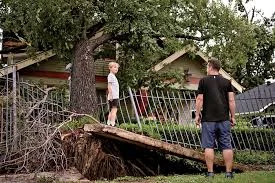
New York City is expanding its outreach to homeowners in flood-prone areas of Queens to determine whether they would consider voluntarily selling their properties to the government as part of a long-term climate resilience strategy.
The initiative, known as Resilient Acquisitions, focuses on neighborhoods where traditional flood-control measures may be difficult or insufficient. The latest outreach includes Hollis and the Kissena Park area of Flushing, both of which experienced severe flooding during heavy rainstorms in May and July.
There is currently no funding available for property buyouts in either neighborhood. For now, the Mayor’s Office of Climate and Environmental Justice is collecting information from homeowners to assess interest and determine whether a future buyout program could be feasible.
“We are listening to homeowners and community members about their interest in voluntary buyouts and evaluating potential pathways forward,” said Pia Fouilloux, a spokesperson for the office.
Some local officials and residents have welcomed the possibility of buyouts, particularly after years of repeated flooding.
New York City Councilmember Sandra Ung, who has advocated for buyouts in flood-vulnerable areas, said residents need to begin discussing the possibility even though such a process could take years.
Hollis and Flushing have experienced devastating flooding in the past. Hurricane Ida in September 2021 resulted in multiple deaths in basement apartments in the two neighborhoods, including a family of three and a mother and her son.
Leona Chin, a Flushing resident and founder of the community group Kissena Synergy, said volunteers have been helping residents learn about the city’s buyout initiative.
According to Chin, some residents were initially skeptical that the program was realistic. But after years of dealing with flooding, interest among homeowners has grown.
Hollis resident and community board member Amit Shivprasad has also advocated for government buyouts. His family owned the house where a mother and her son died during the remnants of Hurricane Ida.
He said residents have spent thousands of dollars repairing their properties after repeated floods, while some now experience anxiety whenever heavy rain is forecast.
The scale of the flooding was particularly evident during a major storm on May 20. Local flood sensors recorded water reaching 46 inches at one Hollis intersection. Surveillance footage reviewed by The City Reporter showed a person swimming through a flooded street while a vehicle was almost completely submerged.
For homeowners who have experienced repeated flooding, a government buyout could offer a long-term solution instead of another cycle of costly repairs.
The potential buyouts are part of a broader climate adaptation strategy known as managed retreat. Under this approach, governments acquire properties in locations where protecting homes from recurring flooding is particularly difficult. The properties can then potentially be converted into parks, natural areas or stormwater storage facilities.
New York City and New York state previously used property acquisitions and buyouts in parts of coastal Queens and Staten Island following Superstorm Sandy in 2012. The current effort is notable because it focuses on inland neighborhoods vulnerable to stormwater flooding rather than primarily coastal areas.
However, buying homes during a housing shortage presents significant challenges. Removing properties from the housing supply could further reduce available housing, while voluntary buyouts could also disrupt established communities.
The Kissena Park area is a small enclave of mostly detached homes surrounded by the park’s greenery, playing fields and walking paths. Some homeowners have already put their properties on the market, including homes listed for more than $1 million.
Sam Wu, who has lived in Kissena Park for about two decades, has submitted the city’s buyout interest form but remains uncertain about what comes next.
Wu lives upstairs with his family, while his brother’s family occupies the ground floor. He said he would eventually like to move to Long Island but is unsure whether to move now or wait to see whether the city eventually offers a buyout.
The uncertainty is particularly difficult because there is no clear timeline for any potential acquisition.
The city is also considering other flood-control measures in Kissena Park. Officials are planning a cloudburst hub, a series of infrastructure improvements designed to manage large amounts of stormwater during intense rainfall. The city is also exploring a Bluebelt, an engineered enhancement of a natural watershed designed to store and channel stormwater.
However, those projects could take years to complete.
In the meantime, residents continue to take their own precautions. Wu said his family moves their cars whenever heavy rain is forecast and seals parts of the lower floor of their home to keep floodwater out.
For residents who have endured repeated flooding, the prospect of a buyout presents a difficult choice: continue investing in vulnerable properties or wait for a government solution that may still be years away.
As climate change increases the risk of extreme rainfall, New York City’s efforts in Hollis and Kissena Park could become an important test of whether managed retreat can provide a practical long-term solution for homeowners in inland flood-prone neighborhoods.
Source: The City Reporter


Like our facebook page
Subscribe our YouTube channel