


 /
/ 
 Print
Print
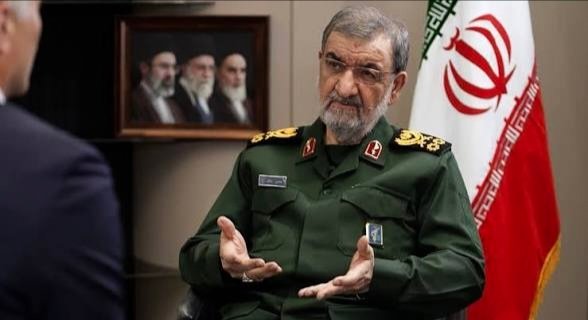
Prospects for a potential peace agreement between the United States and Iran have reportedly stalled over the issue of releasing $24 billion in frozen Iranian assets. Mohsen Rezaei, a military adviser to Iran’s Supreme Leader Ayatollah Seyyed Mojtaba Khamenei, said that negotiations cannot move forward unless US President Donald Trump breaks the current deadlock. He also warned that any renewed conflict could push the United States into what he described as a “dark corridor.”
In an exclusive interview with CNN, Rezaei said the responsibility for ending the impasse lies with Trump.
“The ball is in Trump’s court,” he said. According to Iran’s proposal, $12 billion should be released immediately upon signing an interim agreement, followed by another $12 billion at a later stage.
However, US officials reportedly fear that releasing such funds at this stage would weaken one of Washington’s key sources of leverage over Tehran. The Trump administration is seeking a deal that can be presented as significantly tougher than the 2015 nuclear agreement while avoiding any move that could be perceived as handing over large amounts of cash to Iran.
Rezaei argued that the issue is not merely economic but also a matter of trust.
“If Trump truly wants an agreement with Iran, then this $24 billion is a test of confidence. It is a test the United States must pass before a new path can open,” he said.
He added that the funds belong to Iran and should be returned.
“This is not America’s money. It is our own money,” Rezaei said. “If the United States refuses to release it and instead returns to confrontation, the conflict will not remain limited to the Persian Gulf.”
Rezaei warned that any future war could expand well beyond the region.
“We will take the war to a new level,” he said. “Targets would extend beyond the US bases we have previously attacked. A future conflict could spread from the Strait of Hormuz to the Indian Ocean, the Bab el-Mandeb Strait, the Red Sea, and even the Mediterranean.”
When asked about the health of Iran’s Supreme Leader, Rezaei declined to comment directly. He also dismissed the possibility of a meeting between Trump and Khamenei.
“That will not happen,” he said. “We are still in the early stages of negotiations, and Trump has brought the talks to a standstill.”
Earlier this week, Trump said relations with Khamenei were progressing positively and that he would consider a meeting with the Iranian leader an honor.
Rezaei also reiterated Iran’s position on the Strait of Hormuz, one of the world’s most important energy transit routes. He said Iran and Oman share sovereign authority over the waterway and should jointly manage it.
While rejecting the term “toll,” Rezaei suggested that a maintenance fee for commercial shipping is under consideration, arguing that the cost of maintaining the strategic passage should not be borne by a single country.
A prominent figure in Iran’s security establishment, Rezaei fought in the Iran-Iraq War and served as commander of the Islamic Revolutionary Guard Corps (IRGC) from 1981 to 1997, helping transform it into one of the country’s most powerful institutions.
He later joined the Supreme Leader’s advisory council and served as vice president under former President Ebrahim Raisi. Despite running for president four times, he has never won an election.
Rezaei also referred to the 40-day US-Israel-Iran conflict that reportedly began in late February, during which Iran was said to have launched retaliatory strikes against targets in 12 countries across the Middle East.
Reports from the conflict period claimed that military facilities, energy infrastructure, and civilian targets were hit, while missiles were also allegedly launched toward the US-UK military base at Diego Garcia in the Indian Ocean.
According to Rezaei, Iran remains skeptical about the durability of any future agreement due to what he described as Trump’s unclear negotiating strategy and Washington’s withdrawal from the 2015 nuclear deal.
He further stated that Iran is prepared for any potential US ground operation.
“If they attack our territory, the world will witness Iran’s true military capabilities,” he said. “Our ground forces are far more powerful than our missile capabilities.”
Describing the recent conflict as a turning point in Iranian history, Rezaei claimed that it marked the first war Iran has won since the establishment of the Islamic Republic 47 years ago.


Like our facebook page
Subscribe our YouTube channel