


 /
/ 
 Print
Print
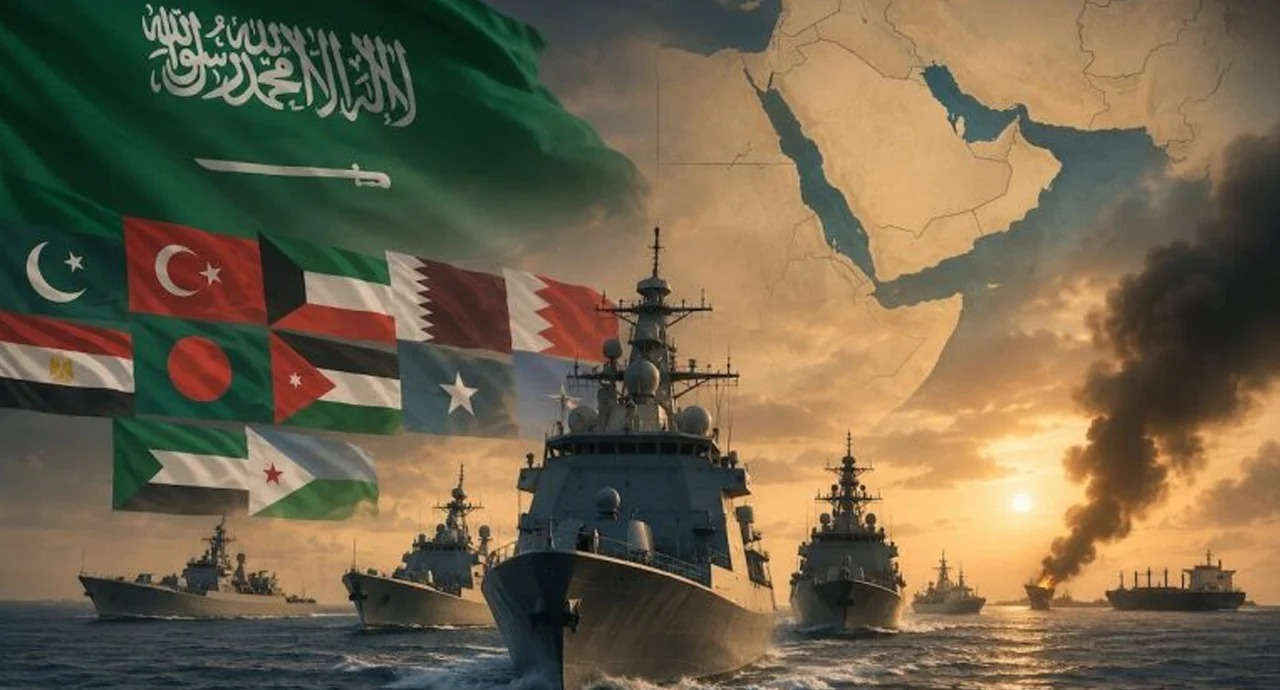
A new form of regional security arrangement appears to be emerging around the Red Sea, signaling a possible shift in the Middle East’s long-standing reliance on the United States for security.
An initiative led by Saudi Arabia to establish a multinational maritime defense alliance involving 14 countries could create a new regional security framework. While the United States is likely to retain an important role in military capabilities and major strategic decisions, regional countries may take on greater responsibility for security, conflict management and regional stability.
Representatives of the participating countries signed the founding declaration of the new alliance in Riyadh, the Saudi capital, on July 30. Under the proposed structure, the alliance’s permanent headquarters, integrated command structure, joint command and control center, maritime operations center and permanent secretariat will be based in Saudi Arabia.
However, the alliance is not yet fully operational. It remains unclear how much military capacity each member will contribute, how joint operations would be conducted during a crisis and whether the United States would formally participate. For now, the initiative is therefore being viewed primarily as a political and institutional framework.
One of the most significant aspects of the new alliance is the participation of Saudi Arabia and Egypt. In December 2023, the United States launched Operation Prosperity Guardian to protect shipping in the Red Sea, but Saudi Arabia and Egypt did not join the initiative. Both countries are now founding members of the new maritime alliance.
Analysts say the development reflects a growing desire among Saudi Arabia and other regional countries to play a greater role in making their own security decisions rather than simply participating in initiatives led by outside powers.
The Red Sea initiative also fits into a broader pattern of new defense and security cooperation across the Middle East. Saudi Arabia and Pakistan signed a strategic mutual defense agreement in 2025. Turkey and Egypt later moved to expand military and defense cooperation. On August 7, Turkey, Pakistan and Saudi Arabia also reached an understanding in Mecca on a new framework for trilateral cooperation.
In addition, Saudi Arabia, Pakistan, Egypt and Turkey have developed a political and security cooperation framework known as “R4.”
These developments suggest that Middle Eastern countries are increasingly turning to multiple cooperation arrangements based on specific needs and shared interests rather than relying solely on traditional, rigid military alliances. Instead of creating a single alliance involving all regional countries, states appear to be forming smaller partnerships focused on particular threats and issues.
The activities of Yemen’s Houthi movement in the Red Sea are widely seen as one of the factors behind the new maritime security initiative. In 2023 and 2024, Houthi attacks primarily targeted commercial vessels linked to Israel and Western countries. More recently, however, the consequences of the disruption have also begun to affect Saudi Arabia’s economic interests.
Disruptions to shipping through the Strait of Hormuz have increased the importance of Saudi Arabia’s ability to export part of its oil through the Red Sea port of Yanbu. As a result, security in the Red Sea has become increasingly important for Saudi Arabia’s energy exports and broader economy.
Concerns have also grown over the possibility that the Houthis could seek to control shipping through the Bab el-Mandeb Strait or impose fees on vessels passing through the strategic waterway. Such a development could allow a non-state armed group to gain long-term economic and political influence over one of the world’s most important maritime routes.
Taken together, the new Red Sea maritime defense alliance should not be viewed simply as a military initiative. It also reflects broader changes in the Middle East’s security environment.
Although the United States is likely to remain an important military and strategic power in the region, Saudi Arabia and other regional countries are seeking a more active role in protecting their own security and strategic interests.
The effectiveness of the new alliance, however, remains uncertain. Its significance will become clearer once the military contributions of member states, the joint decision-making process and the mechanisms for cooperation during crises are established.
Only then will it be possible to determine whether the initiative represents the creation of a genuinely new regional security structure around the Red Sea or the beginning of a much broader transformation of the Middle East’s long-standing security architecture.





Like our facebook page
Subscribe our YouTube channel