


 /

 Print
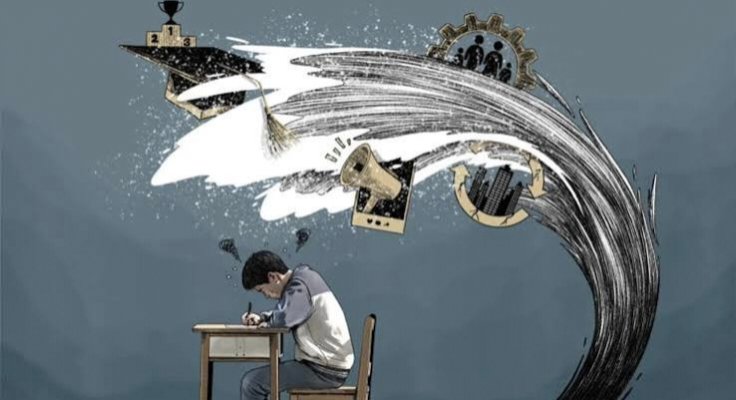
Around 17.5 percent of children and adolescents in China are affected by some form of mental disorder, according to a nationwide study published in 2021.
The survey, led by Beijing Anding Hospital, covered students aged between six and 16. Anxiety and depression were among the most commonly reported mental health problems, the South China Morning Post reported.
Researchers have warned that the actual situation could be more concerning, as the survey did not include children who are not enrolled in school.
According to a 2022 report by the Chinese Academy of Sciences, 14.8 percent of adolescents surveyed were at varying levels of risk of depression, a rate higher than that among adults.
An earlier report by the academy found symptoms of depression in nearly 30 percent of junior high school students and around 40 percent of senior high school students.
Shimin Zhu, an associate professor at the Hong Kong Polytechnic University, said several factors were contributing to the deterioration of young people’s mental health. These include growing academic competition, the expansion of digital media, changing family structures and uncertainty arising from rapid social transformation.
In China, nine years of education, covering primary and junior middle school, are compulsory. Students then sit for an entrance examination to enter senior high school, after which they are divided into general and vocational education tracks.
Depending on the region, around 50 to 70 percent of students taking the examination secure places in general senior high schools.
However, the strong preference for general education in Chinese society has led many families to view vocational education as a sign of failure. This adds further psychological pressure on students at a critical stage of their education.
The Chinese government has announced plans to ease academic pressure on students and establish nationwide systems for mental health screening and crisis intervention.
By 2030, the government aims to appoint at least one counsellor in every primary and secondary school and organise at least one mental health-related event or lecture annually.
According to China’s State Council, counsellors are currently available in 92 percent of primary schools and 95 percent of junior middle schools across the country.
However, social stigma surrounding mental health treatment, parents’ concerns about the possible consequences of a diagnosis and a shortage of specialists remain major barriers to accessing care.
A study by the Chinese Academy of Sciences found that only 27.4 percent of parents took their children to a medical facility after they first reported mental health problems.
Meanwhile, a 2019 article published in the medical journal The Lancet estimated that China had around 500 qualified psychiatrists specialising in child and adolescent mental health. Most of them were based in major cities.




Like our facebook page
Subscribe our YouTube channel