


 /
/ 
 Print
Print
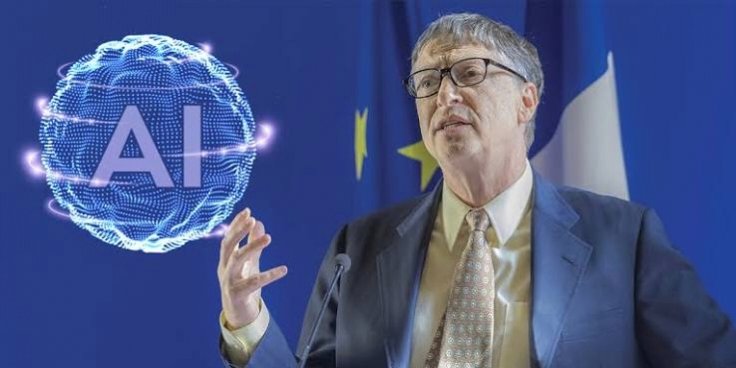
The world is not yet prepared to manage the sweeping social and economic changes that could result from the rapid expansion of artificial intelligence, Microsoft co-founder Bill Gates has warned. He believes AI could displace millions of jobs over the next decade, potentially widening inequality and creating significant social instability.
In a roughly 6,000-word essay, Gates described the transition into the AI era as one of the most disruptive periods in human history. He argued that governments have yet to develop credible strategies to manage the scale and speed of the transformation. AI, he said, could become one of the most powerful tools for reducing inequality, but if poorly governed, it could also become a major source of injustice.
One of Gates’ biggest concerns is permanent job displacement. He cautioned against comparing the AI-driven transformation with previous shifts from agriculture to manufacturing and later to office-based work. Those transitions unfolded over generations and continued to depend heavily on human reasoning. AI, by contrast, has the potential to directly replace tasks that rely on human cognitive abilities.
Gates expects major disruption across sectors including law, healthcare, customer service, software development and manufacturing over the next decade. Young people entering the workforce could face particular difficulties if AI reduces opportunities for entry-level and mid-level positions, making it harder for them to gain the experience needed to build long-term careers.
The threat, he noted, may extend beyond office jobs. As robots become cheaper and more capable, businesses in construction, hospitality and other labor-intensive industries could increasingly turn to automation. Gates believes the effects of this shift could become increasingly visible by the end of the decade.
Gates has also suggested that certain professions should remain primarily human-driven. Even when AI can perform a task faster or more cheaply, he argues that society should not automatically replace people. Fields such as healthcare, education and caregiving require empathy, emotional understanding and meaningful human interaction, qualities that remain difficult to replicate.
He also raised concerns about the misuse of AI, particularly in cybersecurity. According to Gates, cybercriminals are rapidly gaining new capabilities, while security systems are struggling to keep pace. Critical infrastructure, including hospitals, banks, water systems and electricity grids, could become increasingly vulnerable to AI-assisted attacks.
The impact of AI on children and young people is another area of concern. Gates warned that AI chatbots designed to constantly agree with users and rarely challenge their views could become highly addictive. For young people in particular, excessive reliance on such systems could reduce opportunities to develop real-world relationships, handle disagreements and build essential social skills.
To address the economic consequences of automation, Gates has proposed considering new forms of taxation on AI technologies and robots. He argues that such measures could help moderate the pace of automation while generating resources for worker retraining, social protection and other programs designed to support people displaced by technological change.
Gates also believes that AI risks cannot be managed by individual countries acting alone. Greater cooperation among major powers, including the United States and China, will be necessary. He has called for a global framework similar in ambition to international efforts addressing nuclear weapons and environmental threats.
The central message of Gates’ warning is that governments may have little time to respond once the full impact of AI-driven disruption becomes apparent. Policies addressing employment, economic inequality, cybersecurity and human relationships need to be developed now, he argues. Without proactive measures, AI could become not only a driver of technological progress but also a catalyst for profound social and economic upheaval.




Like our facebook page
Subscribe our YouTube channel